

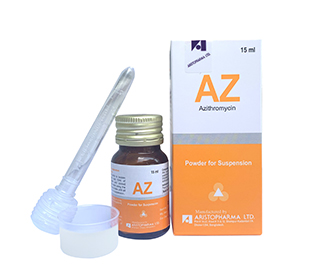
AZ Taste Masked Powder for Suspension
Therapeutic Class
Macrolide Antibiotic
Indications
AZ is indicated in lower respiratory tract infections including bronchitis and pneumonia, otitis media and in upper respiratory tract infections including sinusitis and pharyngitis/tonsillitis, skin and soft tissue infections, mild to moderate typhoid due to multiple-antibacterial resistant organisms, cholera in children and sexually transmitted diseases both in men and women. Azithromycin is also indicated for the treatment of uncomplicated genital infections due to Chlamydia trachomatis and urethritis and cervicitis due to Chlamydia trachomatis and Neisseria gonorrhoea.
Chemical Composition
Each 5 ml contains Azithromycin USP 200 mg
Packaging
15 ml
Dosage & Administration
AZ Taste Masked Powder for Suspension may be taken with or without food. Children > 6 months: The usual dose is 10 mg/kg body weight as a single daily dose for three days: for body weight 15-25 kg, 200 mg or 5 ml/day for 3 days: body weight 26-35 kg, 300 mg or 7.5 ml/day for 3 days: body weight 36-45 kg, 400 mg or 10 mI/day for 3 days. For typhoid fever 10 mg/kg body weight once daily for 7 days or 20 mg/kg body weight once daily for 5 days. Children < 6 months: Not recommended.
Contraindications
AZ is contraindicatd in patients with known hypersensitivity to Azithromycin, erythromycin or any of the macrolide antibiotics.
Side Effects
AZ is well tolerated with a low incidence of side effects. Majority of the side effects are mild to moderate in nature and of gastro-intestinal in origin with nausea, abdominal discomfort, vomiting, flatulence and diarrhoea. Allergic reactions such as rash have occurred and there have also been rare reports of serious hypersensitivity reactions. Reversible elevations in liver transaminase have been seen with a frequency similar to the comparative macrolides and penicillins used in clinical trials.
Drug Interaction
Antacids: in patients receiving Azithromycin and antacid. Azithromycin should be taken at least 1 hour before or 2 hours after antacid. Cyclosporin & Digoxin: Macrolides interfere with the metabolism of cyclosporin & digoxin. Ergot derivatives: Because of the theoretical possibility of ergotism, Azithromycin and ergot derivatives should not be coadministered. Terfenadine: As with other macrolides. Azithromycin should be administered with caution in combination with terfenadine. Overdose: Adverse events experienced in higher than recommended doses were similar to those seen at normal doses. The typical symptoms of an overdose with macrolide antibiotics include reversible loss of hearing, severe nausea, vomiting and diarrhoea. In the event of overdose, the administration of medicinal charcoal and general symptomatic treatment and supportive measures are indicated.