

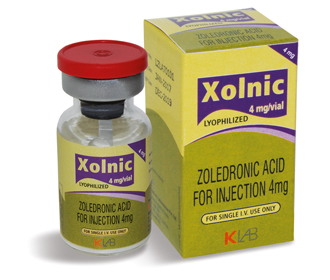
Xolnic Injection
Therapeutic Class
Bisphosphonates, Anti-resorptive medication
Indications
For the treatment of Hypercalcaemia of Malignancy following adequate saline rehydration.
Chemical Composition
Each vial contains Zoledronic acid monohydrate equivalent to anhydrous Zoledronic acid 4mg.
Packaging
1 vial per box
Dosage & Administration
Hypercalcaemia of Malignancy The recommended dose of Zoledronic acid in hypercalcaemia (albumin corrected serum calcium = 12 mg/di) is 4 mg. The 4 mg is given as a single dose i.v. infusion over 15 minutes. Patients should be adequately rehydrated prior to administration of Zoledronic acid. Retreatment with Zoledronic acid is 4 mg, may be considered if serum calcium dose not return to normal or remain normal after initial treatment. It is recommended that a minimum of 7 days elapse before retreatment, to allow for full response to the initial dose.
Contraindications
Zoledronic acid injection is contraindicated in patient with clinically significant hypersensitivity to Zoledronic acid or other bisphosphonates or any of the excipients.
Side Effects
Hypercalcaemia of malignancy Adverse reactions to Zoledronic acid injection are usually mild and transient and similar to those reported for other bisphosphonates. Intravenous administration has been most commonly associated with fever. Occasionally, patients experience a flulike syndrome consisting of fever, chills and bone pain and / or arthralgias, and myalgias. Gastrointestinal reactions such as nausea and vomiting have been reported following intravenous infusion of Zoledronic acid. Local reactions at the infusion site, such as redness or swelling, were observed infrequently. In most cases, no specific treatment is required and the symptoms subside after 24-48 hours. Rare cases of rash, pruritus, and chest pain have been reported following treatment with Zoledronic acid As with other bisphonates, cases of conjunctivitis and hypomagnesaemia have been reported following treatment with Zoledronic acid. Body as a Whole: Asthenia, chest pain, leg edema, mucositis, metastases. Digestive System: dysphagia Hemic and Lymphatic System: Granulocytopenia, thrombocytopenia, pancytopenia. Infection: non-specific infection Laboratory Abnormalities: Hypocalcemia Metabolic and Nutritional: Dehydration Musculoskeletal: Arthralgias Nervous System: Headache, somnolence Respiratory System: Pleural effusion.
Drug Interaction
No clinically apparent interactions occurred with Zoledronic acid was administered concomitantly with commonly used anticancer drugs, diuretics, antibiotics and analgesics. Zoledronic acid shows no appreciable binding in vitro to plasma protein and to human P450 enzymes, indicating a low likelihood of pharmacokinetic drug interaction. However, no formal elinical interaction studies have been performed. Caution is advised when bisphosphonates are administered with amino glycoside, since these agents may have an additive effect to, lower serum calcium level for prolonged periods. This has not been reported in Zoledronic acid clinical trials. Caution is advised when Zoledronic acid is used with potentially nephrotoxic drugs. (Renal functions be monitored). In multiple myeloma patients, the risk of renal dysfunction may be increased when Zoledronic acid is used in combination with thalido.